Reference Manager
A library that does more than haunt your hard drive.
Every paper you save gets an AI summary, a list of related work, and a place for your team’s notes. Bring your library over from Zotero, EndNote, or Mendeley and keep citing in Word or LaTeX.
Cloud-based Up and running in minutes Free to start
Built for the way researchers actually work.
-
Relational tagging
Research doesn't fit neatly into folders. Tag references by concepts and explore how papers connect across topics, projects, and research questions.
-
Modern workflow
Leave outdated interfaces and fragmented workflows behind. Read, annotate, organize, and cite in a modern workspace designed for today's researchers.
-
Collaborate on every paper
Turn individual reading into shared discovery. Collaborate on annotations, exchange ideas, and build on each other's insights, all within the papers you're studying.
What researchers say
CiteGeist’s tagging system offers a uniquely relational approach to organizing and accessing references, while the note-taking and sharing features facilitate collaborative thinking that drives research idea generation and refinement.
One record. Everything you know about the paper.
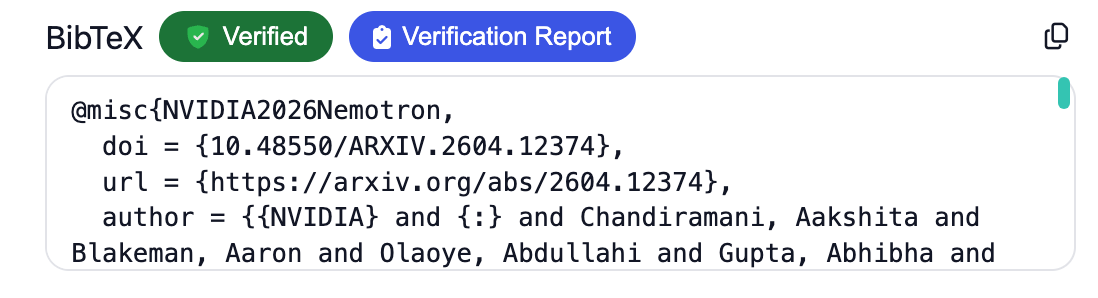
Other reference managers store a citation and a PDF. In CiteGeist, the paper sits next to everything else you need: a verified citation, an AI summary, your team’s notes, and the work it connects to.
% Sam — p. 437, Fig. 1
This figure is the cleanest way to explain backprop in our intro. Can we adapt it?
% Ana — reply
Yes. I’ll redraw it for chapter 2 and \cite{lecun2015deep} there.
Notes and annotations are shared with everyone on the project, right next to the passage they’re about.
- Research objective and context
- Surveys how models with many processing layers learn representations of data at multiple levels of abstraction...
- Methodology
- Explains backpropagation and stochastic gradient descent, then covers convolutional networks for images...
- Key findings and results
- Deep learning has set records in image and speech recognition and shown strong results from drug discovery...
- Limitations or conclusions mentioned
- The authors expect unsupervised learning to matter more in the long run, and see combining representation learning...
Every paper gets a summary of its objective, methods, findings, and limitations, written by NVIDIA Nemotron 3.
deep learningrepresentation learningbackpropagationconvolutional neural networksrecurrent neural networksunsupervised learning+ Add keyword
Keywords are pulled from the paper and are yours to edit. Search, filter, and export your library by them.
- ImageNet classification with deep convolutional neural networksKrizhevsky, Sutskever & Hinton, 2012Add to library
- Long short-term memoryHochreiter & Schmidhuber, 1997Add to library
- Deep residual learning for image recognitionHe, Zhang, Ren & Sun, 2016In your library
- Reducing the dimensionality of data with neural networksHinton & Salakhutdinov, 2006Add to library
Related papers you haven’t saved yet, one click from your library.
Write freely and let CiteGeist handle the citations.
Insert citations straight from your library as you write. When journal requirements change, switch citation styles across your entire manuscript in one click. No tedious reformatting, no interruptions to your workflow.
BibTex and Microsoft Word add-on available now! Google Docs and Overleaf integrations are coming soon.
How citing in Word worksRepresentation learning has reshaped the field (LeCun et al., 2015), and recent work builds on it.
References
LeCun, Y., Bengio, Y., & Hinton, G. (2015). Deep learning. Nature, 521(7553), 436–444. https://doi.org/10.1038/nature14539
Read on the go. Annotate anywhere.
Your library follows you like a friendly ghost.
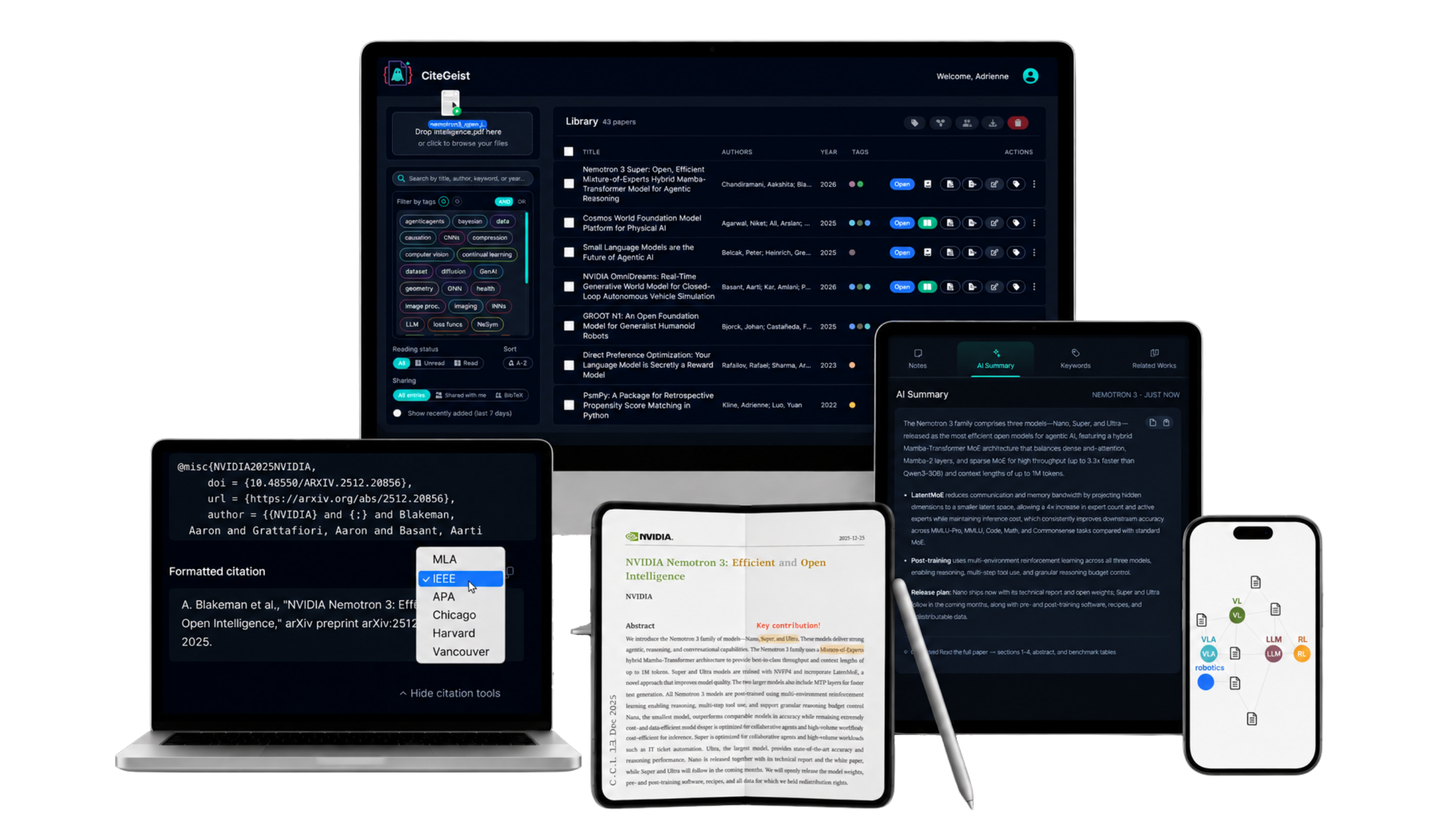
- Real-time syncDesktop, tablet, and phone stay in step as you work.
- Pen and stylusApple Pencil notes are saved to the paper, not a separate file.
- Right where you left offOpen any device and pick up on the same page.
Your research doesn't stop at your library. Neither does CiteGeist.
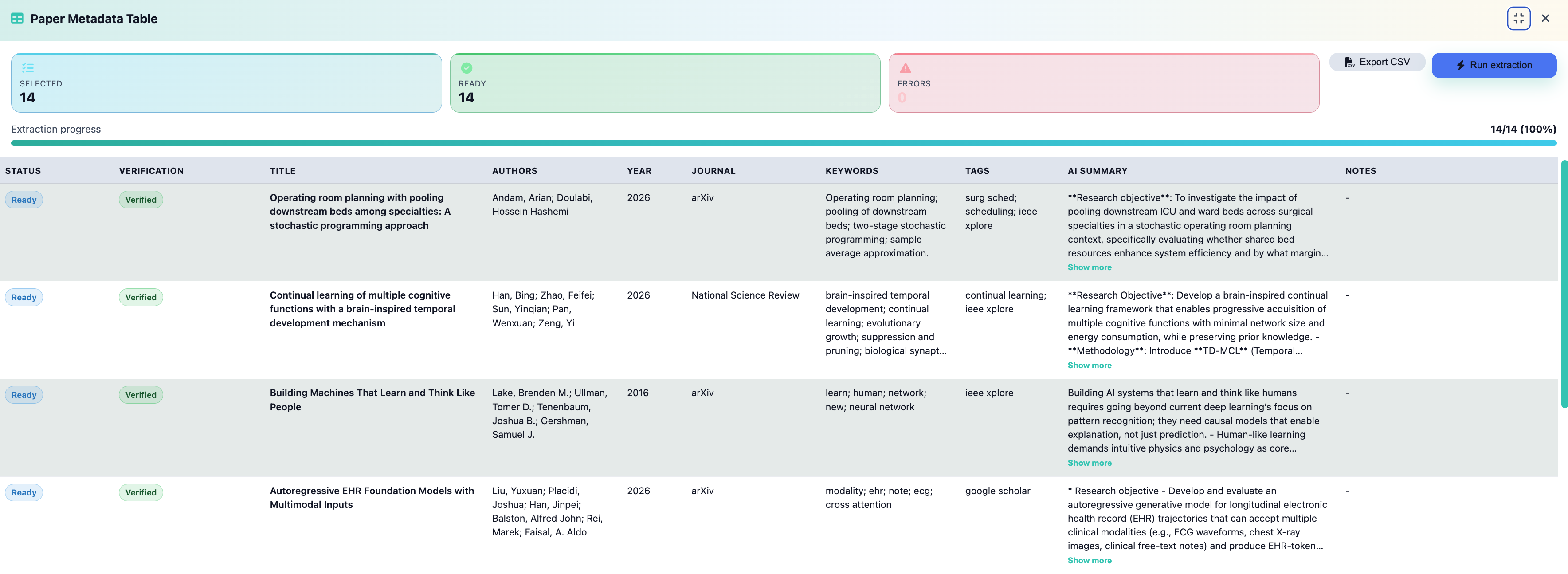
Turn your collection into a systematic review, screen studies, and verify every reference before submission. One connected workflow, without the hassle of juggling tools.